Printed Carrier Bags at fantastic discount prices!

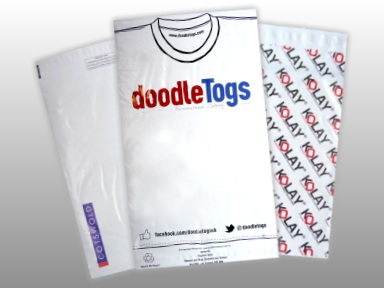
Here at Discount Printed Carrier Bags the clue is in the name. We specialise in providing printed carrier bags - personalised with your own company logo or design - at fantastic discount prices.
Our printed carrier bags start from as little as 4p a bag and we can give you a quote in less than 60 seconds with our instant quote wizard - it's incredibly simple to use and will provide you with a quote on your very own personalised carriers in under a minute.
We love to keep things simple, fast and cheap. We've streamlined our service so that you don't have to wait and so that you can take advantage of wholesale prices with top quality products and first class service.
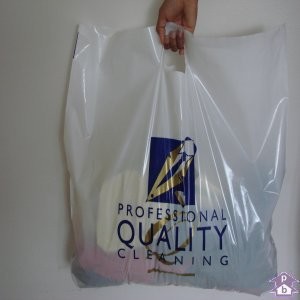
All of our printed carrier bags are patch handle carriers - the classic carrier with a reinforced handle for extra bag strength. They are available in just our five most popular sizes - mini, small, standard, premium and large - and in either white, clear or coloured polythene. No mess. No fuss.
Our minimum order is just 1,000 for most printed carriers, which makes them an affordable option for businesses beyond the traditional retail sector. Ideal for appearances at conferences or trade shows, a small order of carrier bags dedicated to an event can boost your company's profile where it's needed, without breaking the bank or leaving you with boxes of unwanted bags.
Whilst our bags are cheap, we don't compromise on quality. All of our carrier bags are made from polythene with a thickness of 55 microns - 10% thicker than standard carrier bags (50 microns). This extra five microns may not sound much, but it provides a more glossy, more silky and more substantial bag to the touch; when combined with your personalised design this will guarantee your bags look the part and help your organisation stand out from the crowd!
Discount Printed Carrier Bags is brought to you by Polybags Ltd - the UK's number one manufacturer of carrier bags and other polythene packaging - to showcase their printed carrier bag service, which provides bespoke carrier bags at heavily discounted prices.
Polybags specialises in producing first class polythene products at competitive prices with high and low print-runs. Because Polybags is a manufacturer we can always offer direct wholesale prices, cutting out the markup that other merchants have to apply.
Orders placed with Discount Printed Carrier Bags are fulfilled directly by Polybags' first class service team with no commission or additional costs added.
Get off-the-shelf carriers at discount prices
If you're looking for carriers but don't need to design your own, then Polybags' huge range of off-the-shelf carrier bags should cater for your needs, with a massive selection of clear or coloured carriers available in plain or ready-printed designs at fantastic discount prices.
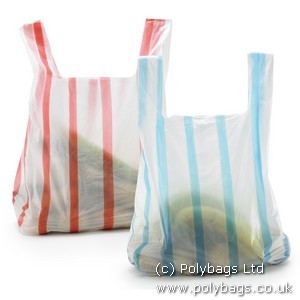
This includes everything from your everyday supermarket crinkly carrier bag - one of many from the popular economy range - to top-of-the-range shopping bags with clip-close fasteners.
Whatever your budget, whatever your business, whatever your customer base and whatever your favourite colour, Polybags' has a carrier bag for you, from a cheap and cheerful plain white vest carrier to a luxury fashion carrier that shows your clientele that you mean business.
But if you really want to stand out from the crowd, then there's only one type of carrier bag for you. That is one that tells your customers who you are and tells everyone they see all about you... that's right, the printed carried bag!
Some common views on discount printed carrier bags
Personalised carriers have to be treated as proper working packaging, not only a printed bag with a emblem on it. The film requirements enough toughness to survive sharp edges, hurried filling and the twisting that happens when a full load is lifted from one place to another. A light gauge may see tidy nevertheless can fail at the seam if the blend has poor stretch or the dart shape is gross. Handle design and seal quality matter only as much, because a weak grip or a poor seal turns an otherwise superb carrier into a handling problem. A bag that suits the job cuts breakages and retains pack-out moving.
The Value of the Few Extra Pennies to Manufacture Personalised Carrier Bags
Personalised carrier bags only work when the print and the film are designed together, because a clever-looking bag still has to survive loading, carrying and repeated flexing. A clean emblem means small if the polymer gauge is uneven or the surface treatment is poor, since ink can rub off, crack or see patchy after a few rounds through dispatch and checkout. The proper test sits in production control: stable melt flow, proper corona treatment and sensible film thickness retain the bag usable rather than decorative. If the spec is also heavy, the pack costs more in material and can become awkward to fold, store and handle. A balanced construction gives a bag that feels tidy in hand and still stands up to normal trade abuse.
Be the first to review Custom Carriers Inc!
Custom carriers in freight work need to be sized and specified for the load they are meant to keep safe, not only the route they are meant to travel. A small operation handling long-distance consignments has less room for waste, so the packaging has to stack cleanly, resist crush, and stay stable through repeated handling at depots and on trailers. Poorly chosen cartons, slip sheets, or outer wraps soon display up as damaged products, claims, and wasted time at the dock. The proper board grade or film gauge can make a modest facility dash more smoothly because less loads need rework. Good packaging selection is what retains a small freight business moving without avoidable delays.
Custom carrier bags are only useful when the printed design still works as a carrying tool, not only a part of branding. The proper jobs are load assist, clean seal lines and enough film strength to survive dense or awkward products without splitting at the handle or edge. Gauge selection, handle punch shape and film orientation all affect how a bag behaves once cartons or bottles beginning pressing against it, while heavy ink coverage can upset sealing if the process is not tightly controlled. The optimal runs are managed so the print stays sharp without weakening the material. That balance is what retains the bag serviceable in store and honest in use.
Amendment of the Carriers? Liability Regulations 2002: normal
Carriers need tight procedural rules because a penalty system only works when deadlines and service methods are transparent. The amendments to the 2002 Regulations do that by setting fixed periods for payment, objection, and decision-making, so none is left guessing how long a case can sit open. They also spell out how notices can be served by electronic mail and when that counts as proper service, which matters when paper records are slow or a trailer has already moved on. Clear timing reduces disputes and retains enforcement closer to the pace of proper transport operations.
Carrier bags now have to be chosen and handled as a proper supply item, not only thrown in beside the till. When they were given away without a view, waste climbed because the bag was seen as part of the sale rather than something that had to be justified. Charging for them cut demand sharply, which changed the all trade picture: less reels or stacks needed manufacturing, less lorry space was taken up, and store teams had less loose stock to retain below control. That shift also exposed poor specification, because a weak bag or awkward handle soon becomes apparant when each one is being used more deliberately. The practical result is a smaller nevertheless more carefully managed bag flow.
Offering now discontinued by most discount carriers
Many discount carriers have moved away from offering the old-style service that once sat at the bottom of the price list, because the economics no longer suit low-margin transport. A cost-effective option often sees tidy on paper, nevertheless it can bring awkward loading windows, tighter handling rules, and less room for special requests when vehicles are turned around fast. In warehouse terms, that means poorer fit with stock rotation and more pressure on dispatch staff to acquire consignments out in the proper sequence. The result is a service that disappears once profitability and client assist are weighed properly.
Printed carriers do above transport products because they also transport the shop message through checkout, the car park and the last mile home. That only works when the bag is specified for the proper load, not only for the artwork. A light film may print well nevertheless fail below a heavy mixed occupy, while a paper carrier can see clever yet suffer if the board grade or handle area is also weak. Good print cover should not conceal a thin gauge or a poor seal line. When the material and print are matched to the handling route, the carrier does its normal job properly and still earns its place as secondary packing.
How Can Printed Carrier Bags Help To Promote Your Brand
Printed carrier bags have to balance appearance with hard-wearing daily use, because the print sits on material that still requirements to dash cleanly through converting, stacking, and dispatch. If the gauge is also light, the film can feel flimsy and the handles may suffer at the point where stress is highest; if it is also heavy, the bag can lose the easy handling and tidy stop expected on the shop floor. Print also requirements to stick properly so it does not scuff in transit or block when packed in piles. A sensible specification gives a bag that carries products properly and still presents the emblem clearly.
Personalised carriers need to be built around the method they will transport through the chain, not only the method they see on a screen or a sample sheet. A season ticket or access pass may seem like a small printed item, nevertheless it still has to cope with picking, sorting, coding and repeated handling without the print losing clarity or the surface marking up. Good print registration and a proper card or film structure assist retain the data readable, while a patchy coating or uneven seal can cause waste later when items are checked and rejected. That means the carrier has to keep safe accuracy as much as it carries an identity.
Let your customers advertise for you!

Printed carrier bags allow your customers to provide mobile advertising for your business. Print your company logo or design on the side of a carrier bag and spread the word about your business, right at the heart of where you need it most - among other potential customers!
Whether on the high street or shopping centre, or even at a conference or trade show, printed carrier bags show that your company means business, they reinforce your branding and show that you have a professional edge - with your own customers and everyone else who sees your bags being carried around.
With prices from as little 4p a bag, getting your own printed carriers doesn't have to break the bank, so why not spend that little bit more and get Discount Printed Carrier Bags to produce your quality carrier bags at wholesale prices - no hidden costs, no middle-man, buy direct from the manufacturer and save money.
We can give you an online quote in less than 60 seconds, so there's no need to wait around. Place your order and we'll produce your functional shopping bag and marketing tool rolled into one at a discount price.
Once that's done, all there is left to do is let your brand do the talking and let your customers show your business to the world!
Printed carrier bags mean re-used carrier bags
If you provide one customer with a plain, unremarkable carrier bag and then you provide the next customer with the same carrier bag, only this time it's printed with a smart and snazzy design, representing your company on the sides of the bag, which of the two customers is most likely to remember the bag?
The answer of course is the second one! Not only is the bag more likely to stand out in their memory but, if the customer has received a positive shopping experience when they first received the bag, the chances are they will then associate the bag with a positive recollection of your company.
This itself means that the customer is more likely to re-use your printed bag, compared to an ordinary plain carrier bag or a bag associated with a less positive experience which, in turn, means the chances of your printed carrier bag getting repeat trips to the shop are increased, thus advertising your company once again within its target market.